
Repair or Replace Your Appliance? A Complete Guide for Edmonton Homeowners
Updated: Jun 15
Your washing machine stops mid-cycle. Your fridge is no longer keeping food cold. Your dryer takes two hours to dry a single load. In moments like these, every Edmonton homeowner faces the same question: is it worth repairing this appliance, or is it time to replace it?
The answer is rarely black and white. This guide walks you through every factor, appliance by appliance. Before reading further, check our Edmonton appliance repair cost guide to understand typical repair prices for each appliance.
The Golden Rule: The 50% Rule Explained
The most widely used guideline in the appliance repair industry is the 50% rule: if the estimated repair cost exceeds 50% of the price of a comparable new appliance, replacement is generally the smarter long-term investment.
For example, if a new washing machine costs $800 and the repair quote comes in at $450 — that is 56% of replacement cost. In this case, replacing makes more financial sense. But if the repair costs $250, that is just 31% of replacement cost, and repair is clearly the better option.
The 50% rule is a starting point, not a hard law. Age, energy efficiency, and repair history all play a role.
Key Factors to Consider Before Making Your Decision
1. Age of the Appliance
Average lifespans: Refrigerators 10–18 years, Washing machines 10–14 years, Dryers 10–13 years, Dishwashers 9–12 years, Ovens and stoves 13–15 years, Freezers 12–20 years. If your appliance is within 2–3 years of the end of its expected lifespan and requires a significant repair, the investment is rarely worthwhile.
2. Repair History
An appliance that has required multiple repairs in the past two or three years is signalling a broader reliability problem. If you have spent more than one year's worth of the appliance's original purchase price on repairs over the past two years, replacement is almost certainly the better path.
3. Energy Efficiency
Older appliances consume significantly more energy than modern equivalents. An ageing refrigerator or washing machine can add $100–$200 to your annual energy bill compared to a current Energy Star-rated model.
4. Parts Availability
At Appliance All Service, our technicians carry parts for all major brands including Samsung, LG, Whirlpool, Maytag, Frigidaire, and Kenmore. If parts for your model are no longer available, replacement becomes the only practical option.
Repair vs Replace: Appliance-by-Appliance Breakdown
Refrigerator: Repair or Replace?
Repair if: the fridge is under 10 years old and the fault is not a compressor failure. Replace if: the fridge is over 12 years old, has had multiple repairs, or requires a compressor replacement.
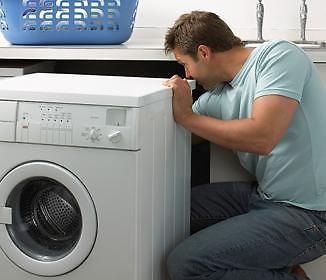
Washing Machine: Repair or Replace?
Hard water in Edmonton can accelerate washer faults — read our guide on how hard water affects your appliances for prevention tips. Repair if: under 8 years old and repair under 50% of replacement cost. Also see our washer not spinning troubleshooting guide for common fault diagnosis.
Dryer: Repair or Replace?
Dryers are generally the most straightforward appliance to repair. Repair if: almost always — dryer repairs are cost-effective across most age groups. Replace if: drum or motor failure on a machine over 12 years old.
Dishwasher: Repair or Replace?
Repair if: under 7 years old with a mechanical fault. Replace if: over 10 years old with electronic or motor failure. Edmonton’s hard water accelerates wear significantly.
Stove, Oven & Range: Repair or Replace?
Stoves and ovens have long lifespans — 13–15 years on average. Repair if: almost always for single component failures. Replace if: extensive rust, structural damage, or control board failure on a stove over 12 years old.
The Third Option Most Edmonton Homeowners Overlook: Refurbished Appliances
At Appliance All Service, we sell fully reconditioned appliances backed by our in-home warranty. Available for same-day pickup or next-day delivery across Edmonton, Sherwood Park, and St. Albert.
A refurbished unit typically costs 40–60% less than a comparable new unit. Browse our refurbished appliance inventory before committing to a new purchase.
How Appliance All Service Can Help
Since 1980, Appliance All Service has been helping Edmonton homeowners make smart appliance decisions. We service all major brands across Edmonton, Sherwood Park, and St. Albert.
Not sure what your repair will cost? Read our detailed appliance repair cost guide for Edmonton to understand what to expect before you call.
Book a Repair or Browse Refurbished Appliances in Edmonton
Call us at (780) 468-4616 or book a service appointment online. We also serve Sherwood Park appliance repair customers.


Comments