
How Hard Water Affects Your Appliances in Edmonton
Updated: Jun 15
If you live in Edmonton, you are living with hard water. The City of Edmonton's water supply consistently measures between 170 and 200 mg/L of dissolved minerals — well above the 120 mg/L threshold that qualifies as "hard." While it is safe to drink, hard water is quietly one of the biggest threats to the lifespan of your home appliances.
At Appliance All Service, we see the effects of Edmonton's hard water every single week. If an appliance has already broken down, see our appliance repair cost guide for Edmonton to understand your options.
What Is Hard Water and Why Does Edmonton Have It?
Hard water contains elevated levels of calcium and magnesium. Edmonton's water is sourced from the North Saskatchewan River, which picks up these minerals as it flows through the Rocky Mountain foothills. By the time it reaches your taps, it carries enough dissolved minerals to leave visible scale deposits on your fixtures and the internal components of your appliances.
How Hard Water Damages Your Appliances
Dishwasher
Dishwashers are the appliance most visibly affected by hard water. Mineral deposits build up inside the spray arms, reducing cleaning performance and forcing the pump to work harder.
Fix: Run an empty hot cycle with a cup of white vinegar monthly. Use rinse aid every cycle. If performance has declined, professional descaling can restore your dishwasher without full replacement.
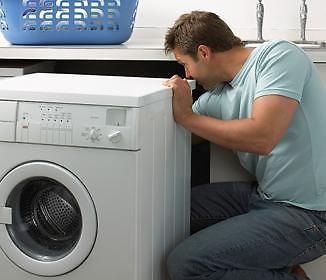
Washing Machine
A scaled-up inlet valve is one of the leading causes of washing machines failing to fill or spin correctly — a common repair call in Edmonton. Hard water also reduces detergent effectiveness, increasing your running costs.
Fix: Use a washing machine cleaner monthly. For front-loaders, leave the door open between cycles to prevent mould buildup worsened by mineral residue.
Refrigerator with Ice Maker or Water Dispenser
Fix: Replace your fridge water filter every 6 months rather than the standard 12-month recommendation — Edmonton's mineral levels clog filters faster. If your dispenser has slowed, the inlet valve or filter housing likely needs attention.
Signs Hard Water Is Already Damaging Your Appliances
Watch for: white or grey scale deposits around taps or inside appliance drums; cloudy glassware from the dishwasher; washing machine taking longer to fill; slow ice maker or water dispenser; appliances running louder than normal; higher energy bills.
How to Protect Your Appliances from Hard Water in Edmonton
Use a Water Softener
A whole-home water softener is the most effective long-term solution. It can extend the lifespan of every water-connected appliance in your home by several years.
Descale Regularly
Monthly descaling using white vinegar or a commercial cleaner prevents mineral buildup from reaching critical levels. Consistent maintenance is far cheaper than a repair call.
Change Filters More Frequently
Edmonton homeowners should replace refrigerator water filters every 6 months and dishwasher filters every 3 months — more frequently than the manufacturer's standard recommendation.
Already Seeing Hard Water Damage? We Can Help
Appliance All Service has been repairing Edmonton appliances since 1980. We service Samsung, LG, Whirlpool, Maytag, Frigidaire, and Kenmore — with same-week in-home visits across Edmonton, Sherwood Park, and St. Albert.
Not sure whether to repair or replace a hard water-damaged appliance? Read our complete repair vs replace guide to make the right call for your budget.
Book an Appliance Inspection in Edmonton Today
Call us at (780) 468-4616 or book a same-week appointment online. We serve Edmonton, Sherwood Park, St. Albert, and surrounding areas of Northern Alberta. Also serving Sherwood Park appliance repair customers.


Comments